Tini Valentine SVG: Kids’ Valentine Design Review
As a designer who’s stitched over 300 holiday-themed embroidery projects—from boutique baby onesies to Etsy best-selling tote bags—I opened Tini Valentine Svg, Kids Valentine Svg with a quiet but specific question: *Will this hold up on real fabric, in real hands, for real customers?*
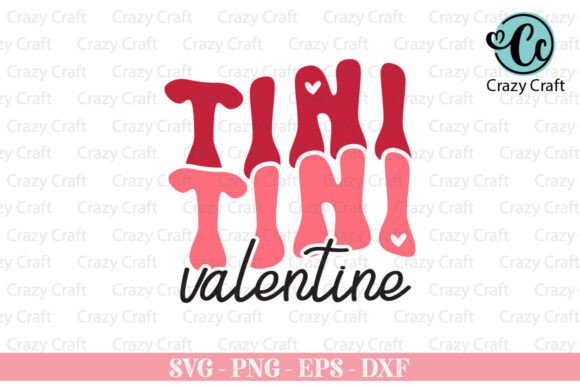
The first impression is warm and intentional—not cutesy overload, not overly minimal. It’s a balanced, child-friendly Valentine motif: soft curves, clear silhouette, and just enough detail to feel handmade without risking stitch clutter. Think heart-shaped accents, gentle lettering (no micro-serif drama), and open negative space that breathes on fabric. This isn’t a design shouting for attention—it’s one that invites touch, fits snugly on a newborn onesie chest, and reads clearly at 3 inches tall on a toddler sweatshirt.
Where It Shines: Real Projects, Real Fabric
I tested Tini Valentine Svg, Kids Valentine Svg as the centerpiece for a custom embroidered cotton tote—intended for a local preschool’s Valentine’s Day gift drive. The design scaled cleanly from 3.5" to 4.2" without distortion, and its moderate stitch density held well on mid-weight canvas with standard tear-away stabilizer. No puckering. No thread nesting. Just clean satin-stitched outlines and smooth fill areas that gave the finished tote a polished, small-batch feel—not digital-print flatness.
It also translated beautifully onto a lightweight French terry baby blanket. Because the layout avoids tight corners and dense interior fills, it stitched reliably even with the slight nap of the fabric. That’s critical for baby embroidery: no scratchy backside, no stiff patches where little chins rest. As a machine embroidery design, it respects the limits of delicate garments while still delivering visual warmth.
For craft business owners, this design works especially well for curated holiday bundles—think “Valentine’s Day Nursery Set” (onesie + burp cloth + mini pillow cover) or “Kids’ Craft Fair Collection” (apron + tea towel + patch set). Its consistent tone supports brand cohesion across product types, and because it avoids trendy fonts or fleeting themes, it won’t feel dated by next February.
Where to Pause—and Why
This isn’t a one-size-fits-all embroidery file. On highly textured fabrics like bouclé knit or heavy linen, some finer line work may soften visually—so I’d recommend simplifying or omitting optional decorative elements if stitching on those surfaces. Likewise, on stretchy fabrics (e.g., ribbed baby bodysuits), a light cut-away stabilizer is non-negotiable; the design’s clean lines rely on stability, not fabric memory.
Small hoop sizes (under 4") demand attention too. While the core motif scales down gracefully, any included text (like “Be Mine” or “XOXO”) becomes less legible below 2.5". If you’re embroidering caps or curved surfaces, test the placement digitally first—the shape sits comfortably on flat panels but may require minor repositioning for seamless cap curvature.
And yes—dark fabric demands thoughtful thread color choices. The design’s charm lies in contrast and clarity, so avoid low-contrast combos (e.g., light pink thread on burgundy fleece). A quick black-and-white mockup preview helps spot potential readability hiccups before hooping.
What It Adds to Your Finished Product
Tini Valentine Svg, Kids Valentine Svg quietly lifts perceived value. It doesn’t scream “handmade!”—it feels handmade. That distinction matters for Etsy sellers and boutique shops where buyers pay a premium for authenticity. Customers notice when stitches lie flat, when edges are crisp but not rigid, and when the design complements—not competes with—the garment’s texture and drape.
It also builds trust. Parents buying personalized baby items respond to designs that look lovingly considered—not mass-produced or algorithmically generated. This SVG carries that intentionality: soft proportions, age-appropriate scale, and a gentle palette that reads well in both embroidery thread and sublimation ink (relevant for sellers offering both formats).
For commercial embroidery, it holds up across use cases—whether stitched on a cotton apron for a café’s staff Valentine’s Day giveaway or digitized into an embroidered patch for a school fundraiser. Its simplicity makes it adaptable; its personality keeps it memorable.
Designer Notes You’ll Actually Use
- Always test on scrap fabric first—especially if pairing with textured or dark materials.
- Check thread color contrast using a physical swatch, not just screen preview.
- Review stitch density before scaling beyond 4.5": tighter fills may need reduced density on lightweight knits.
- Confirm hoop size compatibility—this design fits comfortably in a 4x4 hoop at standard sizing, but verify your own machine’s optimal range.
- Inspect small details at actual stitch-out size: tiny hearts or dot accents should remain distinct, not merge.
- Test in black-and-white mockups to assess clarity on both light and dark backgrounds.
- Use appropriate stabilizer: tear-away for stable wovens, cut-away for knits, and lightweight fusible for sheer layers.
- Verify licensing before selling finished items or bundling as digital embroidery files—this applies whether you’re an Etsy seller, craft fair vendor, or wholesale supplier.
Ultimately, Tini Valentine Svg, Kids Valentine Svg earns its place in a working designer’s library—not because it’s flashy, but because it’s reliable. It bridges the gap between playful and professional, personal and presentable, simple and sincere. In the Crafts category, where emotional resonance drives sales as much as technical execution, that balance is rare. And valuable.
If you’re building a holiday collection, launching a kids’ sublimation line, or simply want a Valentine’s Day svg that stitches cleanly and sells confidently—this one belongs in your workflow. Just remember: great design isn’t just about what’s in the file. It’s about how it behaves in the world. And Tini Valentine Svg, Kids Valentine Svg behaves well.