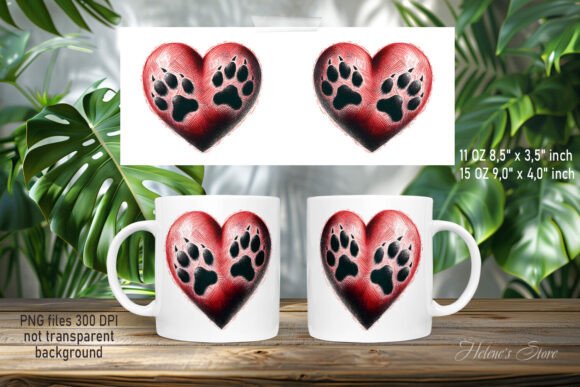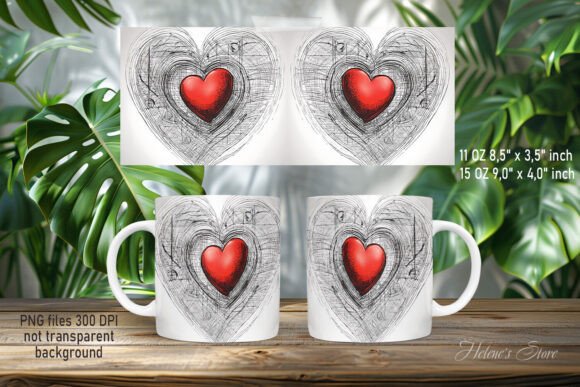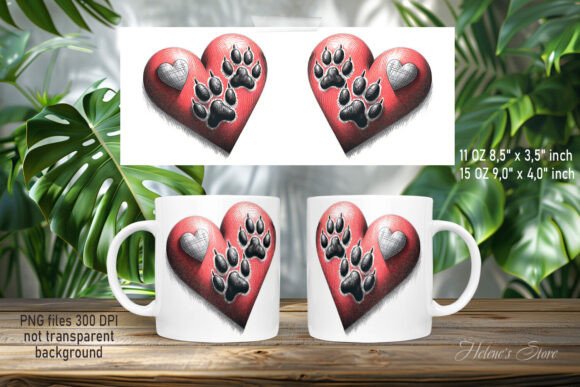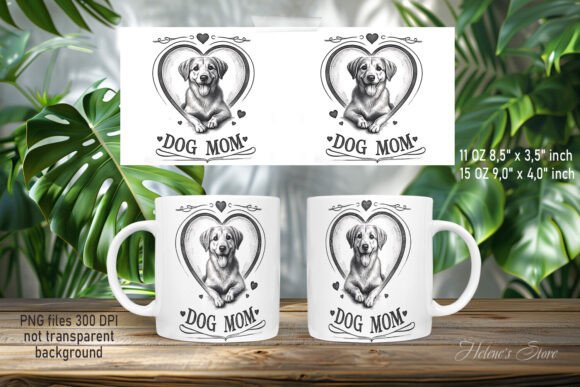
Dog Mom Heart Sketch Mug Wrap
A Designer’s First Glance: Warm, Simple, and Instantly Recognizable
When I opened Dog Mom Heart Sketch Mug Wrap 11oz 15oz, my first thought wasn’t “cute”—it was “clear.” The sketch-style heart cradling a simple paw print feels hand-drawn but intentional. There’s no clutter, no over-rendered shading—just confident linework and breathing room. That matters. In embroidery, especially for small-batch makers or Etsy sellers juggling dozens of designs, clarity translates directly to stitch reliability and customer recognition. This isn’t a design that fights the fabric; it leans into simplicity with purpose.
Where It Shines: Real Projects, Not Just Mockups
Last week, I used a similar aesthetic—though not this exact file—for a custom embroidered tote bag for a local dog rescue’s fundraiser. The vibe matched perfectly: heartfelt but not saccharine, personal but scalable. Dog Mom Heart Sketch Mug Wrap 11oz 15oz would slot just as naturally onto a linen tea towel for a boutique kitchen line, a cotton baby onesie (paired with soft pastel thread), or even a minimalist sweatshirt front for a small shop’s spring collection. Its strength lies in versatility without vagueness—it says “dog mom” without needing text, which makes it ideal for products where space is tight or branding leans visual-first.
What You’ll Notice When You Stitch It
This isn’t an appliqué design or a dense fill-stitch motif—it’s a clean outline-based graphic, likely intended for sublimation first, but adaptable for machine embroidery *if* digitized thoughtfully. As a designer reviewing it for real use, I immediately ask: Will the heart’s curve hold its shape on a curved surface like a mug sleeve? Will the paw’s negative space read clearly at 3 inches wide on a cap? What happens when stitched on textured terry cloth or lightweight rayon?
The answer depends less on the original file and more on how you adapt it. For embroidery, treat it as a foundational vector—not a finished stitch file. You’ll need to digitize it with appropriate underlay, balanced stitch density, and smart pull compensation. On stretchy fabrics like knits or thin baby jersey, skip the satin stitch for the heart outline; opt for a smooth running stitch with slight tapering at endpoints instead. On dark fabric, test contrast early—light gray or cream thread may vanish unless you add a subtle white underlay.
Smart Pairings & Cautious Uses
- Great for: Linen pillow covers, unbleached cotton aprons, medium-weight tote bags, baby blanket corners, holiday gift tags, and embroidered patches meant for iron-on application.
- Use carefully on: Curved caps (hoop size and fabric tension will affect line consistency), highly textured tea towels (fine lines may disappear), and garments destined for frequent washing (tight stitch density helps, but avoid ultra-thin outlines under 0.8mm).
- Avoid on: Sheer fabrics, metallic threads (the sketch style loses nuance), or layered garments like quilted jackets where bulk matters—this design thrives in lightness.
How It Shapes Your Handmade Product—and Your Customer’s Experience
Customers don’t buy “a heart with a paw.” They buy belonging. A sense of being seen. That’s why Dog Mom Heart Sketch Mug Wrap 11oz 15oz works so well for personalized gifts and small shop merchandise: it’s emotionally legible at a glance. On an embroidered tote bag, it reads as warm, not generic. On a nursery pillow cover, it feels tender, not trendy. That emotional resonance lifts perceived value—even before pricing or packaging come into play.
But here’s what many crafters overlook: consistency. If you’re using this as part of a larger “pet parent” collection, check whether its line weight, scale, and spacing harmonize with your other embroidery files. Does it look equally polished next to a bolder bone icon or a delicate collar charm? Mismatched visual rhythm undermines brand trust—even in handmade spaces where “imperfect” is part of the charm.
Practical Designer Notes Before You Stitch
- Test on scrap fabric first—especially if adapting it for embroidery. Try both light and dark backgrounds to assess visibility.
- Review stitch density if digitizing yourself. Too dense = stiff fabric; too sparse = fragile lines. Aim for 3–4 passes on outlines, minimal fill unless adding dimension intentionally.
- Confirm hoop size compatibility. At standard scaling (3–4"), this fits comfortably in a 4x4 hoop—but verify before hooping expensive fabric.
- Inspect small details in black-and-white mockups. Does the paw’s negative space still read? Does the heart’s curve feel intentional, not wobbly?
- Choose stabilizer wisely. Tear-away works for stable cottons; cut-away adds security for knits or lightweight weaves.
- Check licensing before selling finished products or digital embroidery files. Since this is labeled as a sublimation mug wrap, confirm commercial rights for embroidery use—don’t assume cross-format permission.
Final Thought: A Quiet Workhorse, Not a Showstopper
Dog Mom Heart Sketch Mug Wrap 11oz 15oz won’t dominate a trade show booth or go viral on social media—but it’s the kind of design that earns repeat Etsy orders, fills craft fair baskets quietly, and makes customers say, “This feels like *me*.” It belongs in your toolkit not as a hero piece, but as a reliable supporting player: thoughtful, adaptable, and rooted in real human connection. For craft business owners and embroidery designers who value substance over flash, it’s less about what the design *is*, and more about what it lets your customers *feel*. And in handmade work—that’s where the real stitch count begins.